SCHOOL BUSES
Most student transportation falls under state and local jurisdiction because school buses and contracted fleets typically operate intrastate. States maintain strict requirements for driver screening, training, supervision, and medical qualifications, along with tightly regulated vehicle inspection and maintenance standards. FMCSA rules generally apply only when transportation extends beyond routine home-to-school service—such as interstate field trips, athletic events, or chartered activities—which may trigger USDOT registration, passenger-carrier rules, and Hours of Service requirements depending on vehicle size and service type.
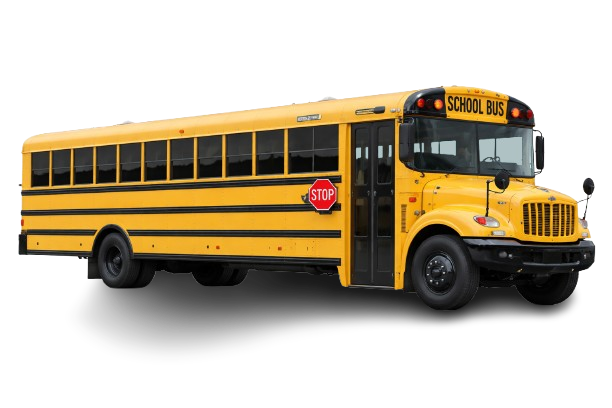
Because student transportation is heavily regulated at the state and municipal levels, loss control must evaluate state-specific compliance as closely as any federal exposure. Strong driver qualification, safety training, supervision, and adherence to state inspection and maintenance standards are critical given the high-severity nature of claims involving minors.
- Pre-School & Elementary
- Middle & High School
- Accessible transportation
- Challenged student services
- Uniformed driver programs
- Interstate field trips & athletic events
- Chartered activities
- Sedans
- Station wagons
- Vans
- Short buses
- Standard buses (by size classification)
- Special equipment (lifts, ramps)
- Equipment modifications
- Used vehicles
- Occupant seatbelt configurations
STATE & LOCAL JURISDICTION
Loss control must evaluate state-specific compliance as closely as any federal exposure given the intrastate nature of most routes.
HIGH-SEVERITY CLAIMS
Claims involving minors are inherently high-severity, requiring exceptional driver qualification and supervision standards.
INSPECTION & MAINTENANCE
States tightly regulate vehicle inspection and maintenance standards—non-compliance carries significant liability exposure.
KEELY MANNING
Senior Account Manager · National Safety & Risk