
WASTE HAULERS
Waste haulers typically operate as local or intrastate carriers, running fixed routes with high-frequency stops throughout the day. This operational model creates an elevated exposure profile: frequent backing, tight maneuvering, and constant interaction with residential neighborhoods, commercial alleys, and pedestrian traffic. The likelihood of striking fixed objects is significantly higher, and overhead damage is a common concern due to front-loader, side-loader, and rear-loader lift mechanisms.
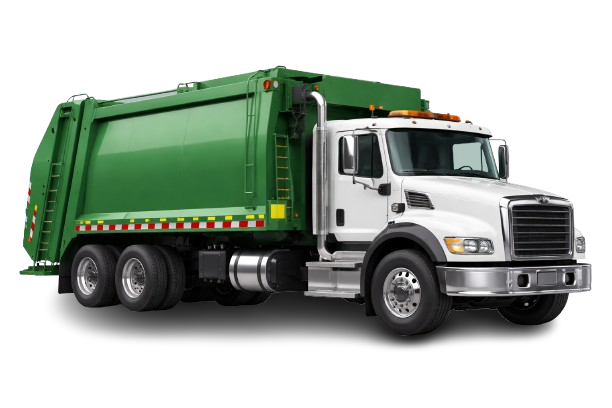
Regardless of whether they transport ordinary municipal waste, recyclables, construction debris, or hazardous materials, waste haulers are required to comply with all applicable Federal Motor Carrier Safety Regulations, along with any state or local rules governing waste handling and disposal.
- Municipal waste collection (irregular & fixed route)
- Residential collection
- Commercial & carting services
- Construction debris removal
- Hazardous materials transport
- Recyclables collection
- Number of contracts managed
- Distance to transfer station & landfill
- Rear loaders
- Side loaders
- Roll-off trucks
- Dump trucks
- Tractors
- Dump trailers
- Walking floor trailers
- Pickups & autos
- Classification by GVW (light, medium, heavy, extra heavy)
ELEVATED BACKING EXPOSURE
Fixed-route, high-frequency stops create repeated backing situations—striking fixed objects and pedestrians is a primary loss driver.
HOT LOAD HAZARDS
Unpredictable waste streams and 'hot loads' (combustible or dangerous materials) add operational and safety complexity.
FMCSR COMPLIANCE
All waste haulers must comply with FMCSA regulations and applicable state/local rules regardless of waste type transported.
KEELY MANNING
Senior Account Manager · National Safety & Risk